A crown of gold.
A throat opened with red thread.
I won't sign my name to this. Not out of shame — a name is just one more thing they can take from you, and mine's already spoken for elsewhere. Ten years since the old king and queen went into the ground, and the realm still hasn't stopped bleeding for it. What follows is everything I know, written the way we've learned to write anything that matters: quietly, and ready to burn.
The Realm
A late-medieval kingdom, roughly the turn of the fourteenth century, dressed in marble and rotting from the inside out.
Crownspire sits at the heart of it, gilded and glittering — cathedral spires, noble feasts, the smell of roasted game drifting over walls built to keep the starving out. Past the city, the ancient forests and mist-locked mountains swallow the countryside whole, and the ruined temples buried in them have quietly become something the crown never intended: places for the forgotten to hide.
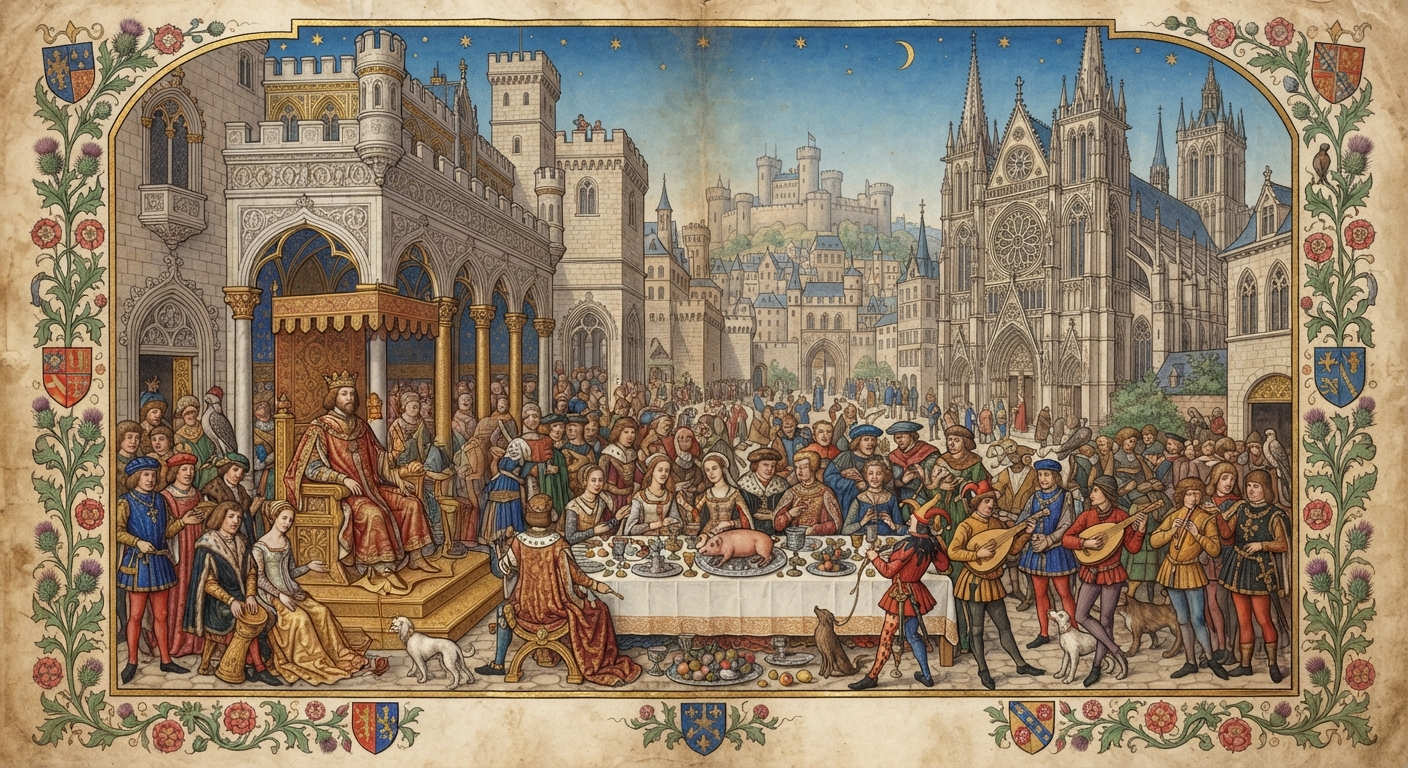
The Court
Marble palaces, towering cathedrals, and nobles who've never once gone to bed hungry.
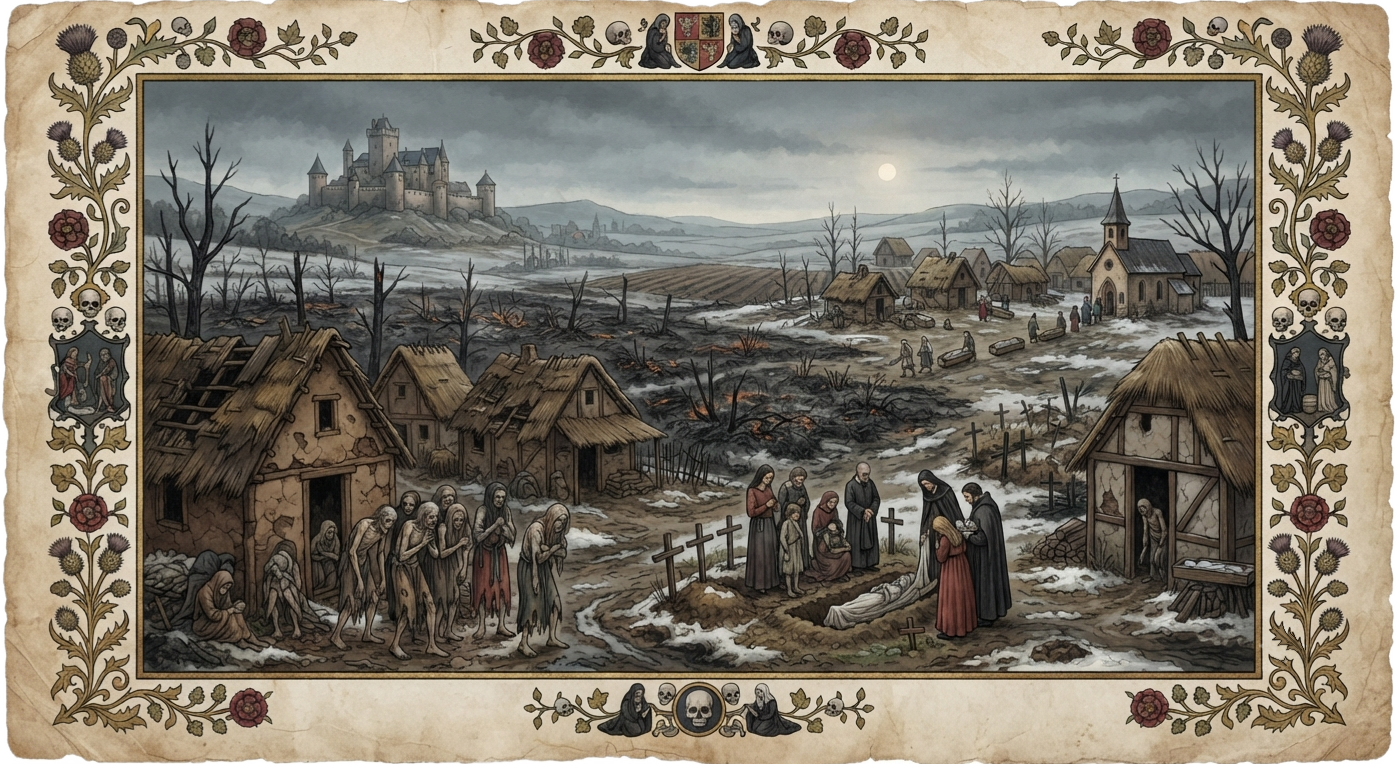
The Country
Burned fields, plague-thin slums, and villages that count winter by how many children make it through.
The Bloodline
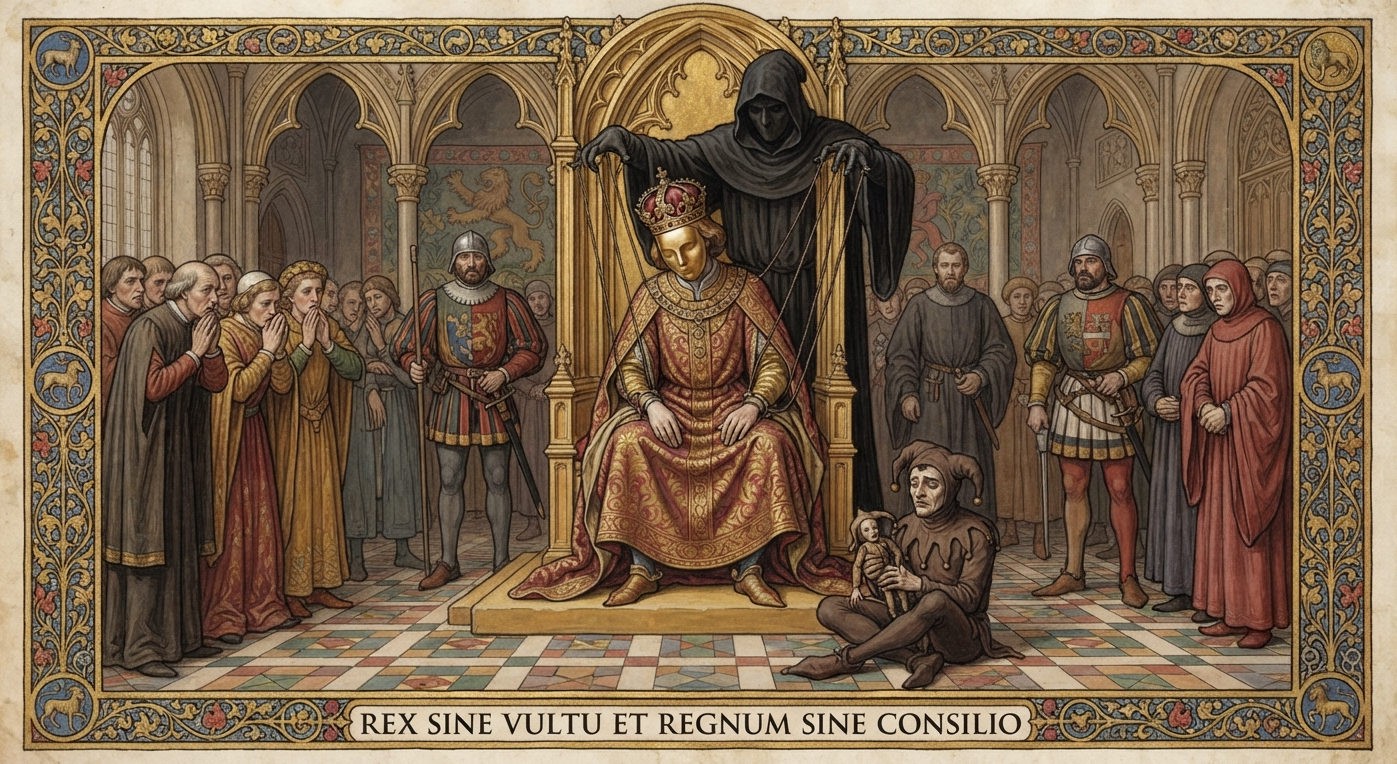
The royal line has sat on Eldren for generations. Ten years back, the king and queen died under circumstances nobody outside the palace has ever been told straight, leaving their son — the boy who is now king — the only heir to a throne he was never old enough to want.
.png)
Prime Minister Lord Varyn Estelbarfghen filled the gap as regent and has ruled from behind the crown ever since. Crushing taxes, rotten lords, and a Royal Guard that reaches for the sword first — that's taught the common folk one lesson, and only one: their king is either indifferent to their suffering, or he enjoys it.
I've seen him up close, once. He looked as trapped as the rest of us.
The Crimson Thread
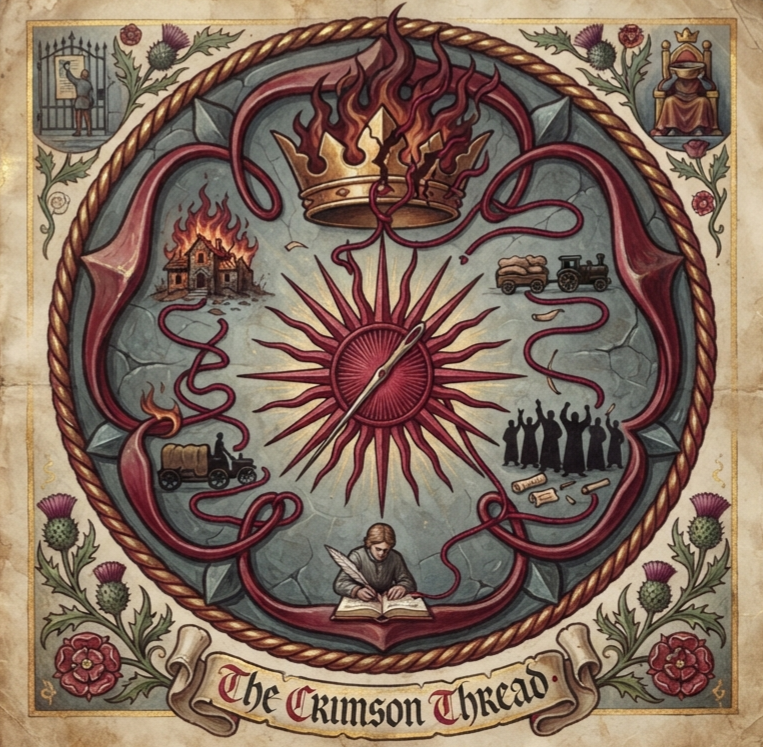
We are not a mob. We are a network, and we have been patient about it.
Noble estates burn. Supply lines vanish in a single night. In the market squares, folk have taken to chanting for the crown's end outright. The court calls us terrorists in every proclamation they nail to the gates. We call the king the root of every empty stomach in the realm. Somewhere between those two stories sits the truth — and we intend to be the ones who write it down properly, one day.
Every action we take gets weighed against one question, no exceptions: does this weaken the king and strengthen the people? If the answer is no, it doesn't happen — I don't care who's asking, or how urgent it sounds by candlelight.
Council & Command
No single one of us holds the whole rebellion in our hands, and that's deliberate. We built it to survive the loss of any single piece — including the man who started it.
(1)(1).png)
GovernanceThe Council of Threads
Nine elders, one per region or trade, meeting only in rotating forest camps. Each carries a distinct trade — finance, logistics, intelligence, diplomacy, medicine, smuggling — so this could outlive any one of them. Osric included. All of them respected veterans and masters of their crafts, they serve neither Osric nor one another blindly, but the ideals of the Crimson Thread above all else — to restrain, advise, and balance him. They don't always agree with Osric, or with each other, but they stand united in keeping both him and the revolution on the right path.
Tap a face for their words. Tap the rest of the card to read who they are.
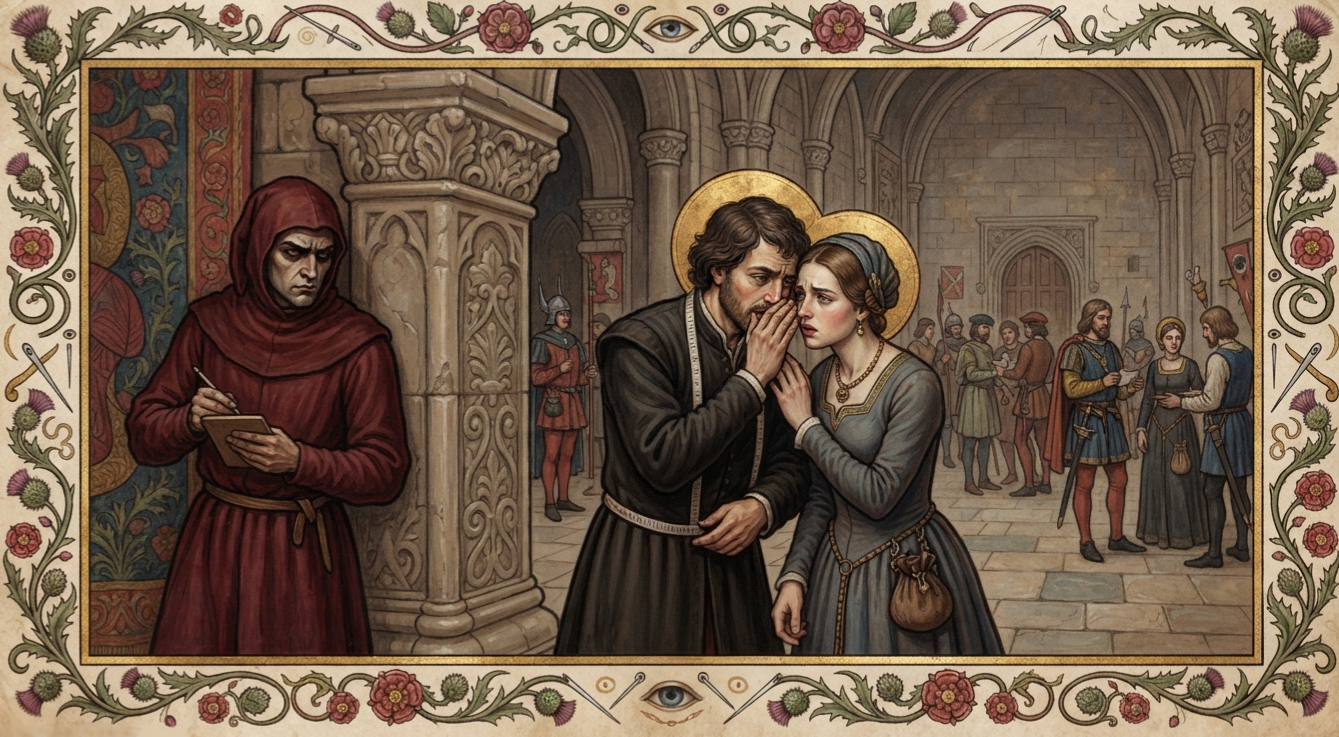
IntelligenceThe Needles
Osric Dunmere's own apparatus — plain, forgettable, and everywhere at once. Servants, tailors, ladies-in-waiting who move through palace and noble hall unseen, answering to no one but him.
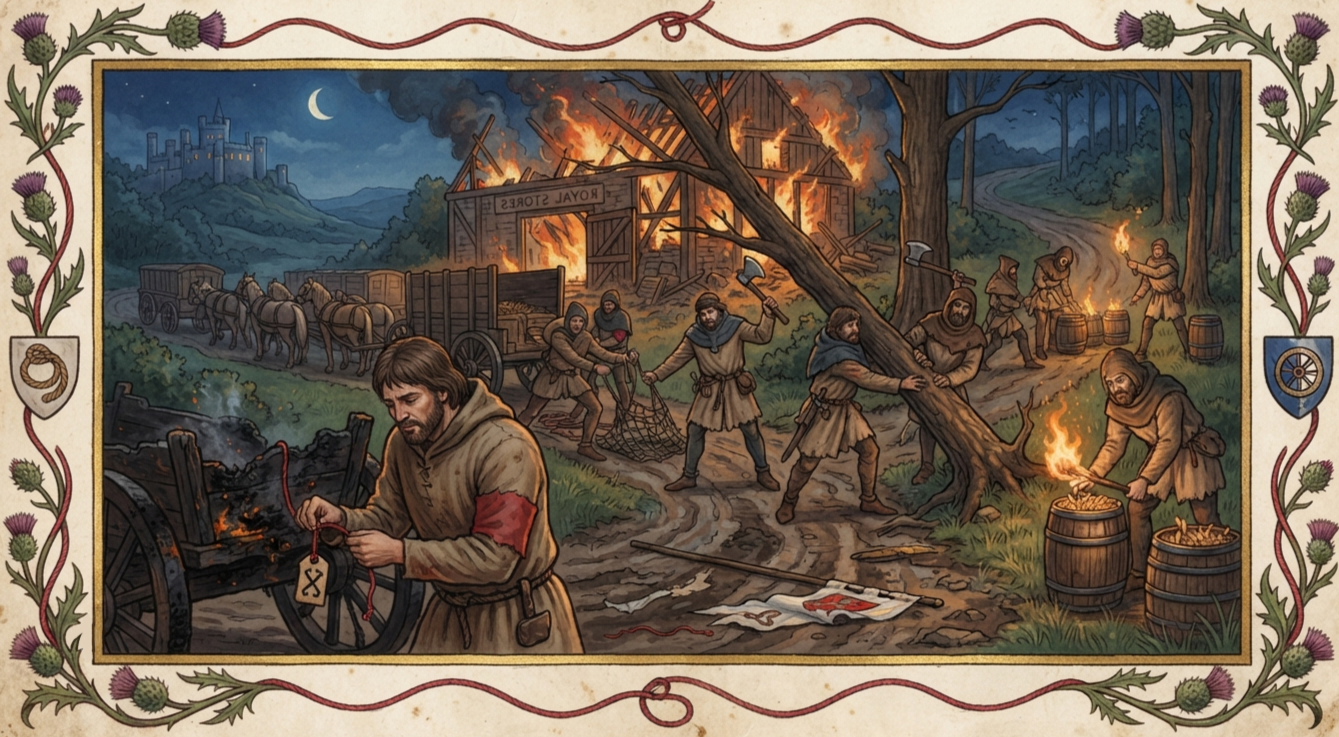
Direct ActionThe Saboteurs
Small guerrilla teams, four to eight strong, cutting supply lines and putting warehouses to the torch — always leaving one red thread tied to the wreckage, so no one mistakes whose work it was.
.png)
PropagandaThe Voice
Osric's pen, made public. The only face of this rebellion the people are ever shown. Every other leader speaks in whispers, and never under a name that could be traced.
The Needles
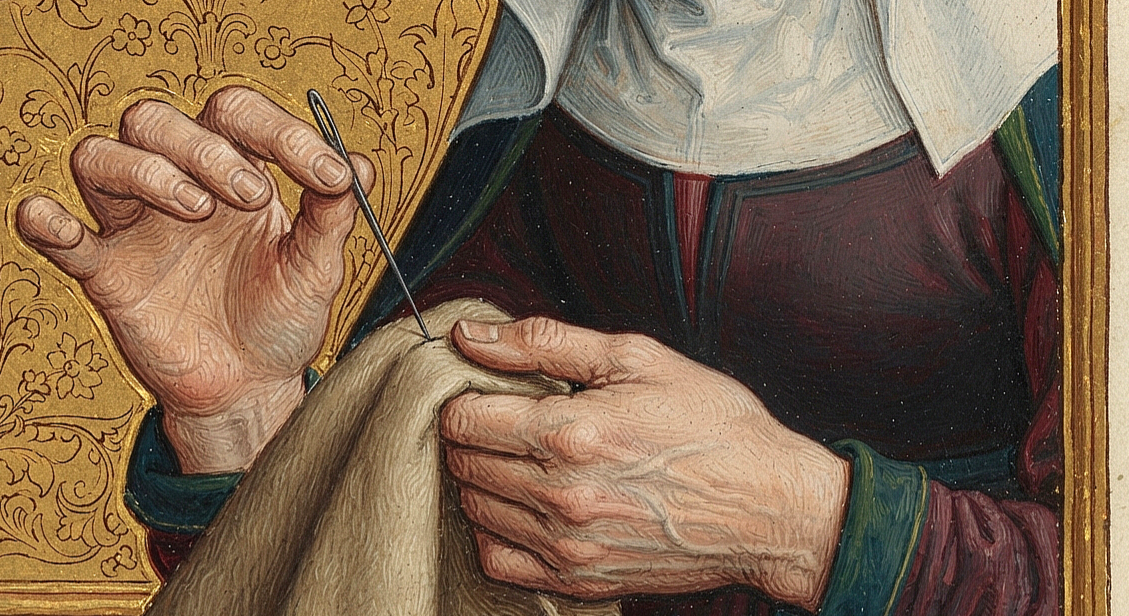
A needle hides a thousand secrets in its eye — and it can kill just as easily. Eleven branches, each named for something any seamstress would carry in her basket, so that no conversation about us ever sounds like one. Tap a name to unfold its work.
Hidden in Plain Sight
Why "Needles," and nothing grander.
Every name in this network was chosen for the same reason: a needle is a plain, everyday object, and nobody suspects a plain, everyday object. It hides a thousand secrets in its eye. It kills just as easily. We never wanted the word to sound clever — we wanted it to vanish into the kind of talk the nobility has trained itself not to hear. "Needles" isn't a codename we picked for flavor. It's deniability, built in from the first stitch.
"I lost my needles."
Said by a palace maid, nobody thinks twice. Of course she did — she sews.
"I need three more needles tomorrow."
Said by a tailor, it could mean sewing needles. Or three more agents sent in.
Overheard by anyone not listening for it, a whole operation can pass for idle sewing talk:
| Could you return my needles? | Send the spies back. |
| The needles are dull | The agents are compromised or ineffective. |
| I broke a needle today | An operative has been captured or killed. |
| I need finer needles for this cloth | Send more experienced infiltrators. |
| Don't leave your needles lying around | Stay hidden — someone is growing suspicious. |
| The needle won't pass through this fabric | This target is too well guarded. |
| Thread the needle | Slip through unnoticed. |
| The eye of the needle is closed | The contact point is no longer safe. |
Even caught mid-sentence, the worst a noble ever thinks is these servants never stop talking about sewing. It works because it's true to how the court already sees us. Seamstresses, laundresses, ladies-in-waiting, tailors — the ones who touch every stitch of clothing and every hour of bedding, who stand inside private chambers for years, and whom the nobility has simply never learned to look at twice. We are, without needing to try, exactly the sort of people who overhear everything.
The branch names carry the same logic downward — kept simple and physical on purpose, so even a member who can't read, or who forgets the finer detail of a role, can still guess its job from the object alone. A Shear cuts. A Bobbin holds thread in reserve. A Thimble protects the hand doing the work. Said aloud, "the shears are dull" sounds like nothing more than a complaint about tailoring. Inside the network, it means our counterintelligence has stopped catching infiltrators.
The Hidden Kingdom
Six safehouses, six secrets. The crown believes these are just ruins and forests. Click below to see the full intelligence map.
The map is incomplete by design. Every Needle knows only their own corner of the web.
Methods of Operation
Guerrilla Sabotage
One red thread tied to the wreckage is the only signature left behind. Drivers and escorts are spared, unless they're actively enforcing the tax.
Infiltration From Within
Stolen seals, poisoned wine bound for noble feasts, whispers planted that the king is weak and distant. Osric has done this work himself — a crippled beggar, a drunken stableboy, whatever the moment called for.
Psychological Warfare
Leaflets left in market stalls read: "The King does not suffer. He watches you suffer and smiles." Captured nobles are never executed publicly — they're paraded through the streets in red-threaded clothing, made to listen to the children they impoverished.
Medical & Relief Missions
Hidden camps treat the sick and share what little food there is to spare. Osric visits every one himself, telling the children that one day the throne will be ash, and they'll be the ones sitting where it stood.
The Thread Code
We don't speak in ciphers or code-words that could be overheard and puzzled out. We speak in stitches — sewn into hems, cuffs, linings, even bed linens, invisible to anyone who doesn't already know the pattern to look for.
| A single knot | I am safe, but watched. |
| A repeating stitch every seven lines | Come at dusk — meet at the hollow oak by the creek. |
| A small tear in the hem | They are looking for us. Change the route. |
| A hidden knot in the neckline | Someone is listening. |
| A red thread hidden in a pocket | The guard rotation is weak tonight. |
When the crown finally learns to listen closer, the grammar simply changes: stitch spacing gives way to button placement, then to patch shapes, then to ribbon braids at festival time. The code never sits still long enough for them to learn it twice.
Rules of Engagement
"If a noble begs for mercy and shows he will never hurt another soul, I will let him live. But he will be made to never sit on a throne again."
— O.D.
A cause that has to become monstrous to win isn't a cause worth winning. That's the whole of it — every rule below is just that idea, written out so no one in the field can pretend to have forgotten it.
Never
- Kill civilians. No cause is worth a body that never held a weapon.
- Commit rape or assault. No exceptions, no war-time excuses, ever.
- Loot private homes. We take from the crown's coffers, not from a neighbor's larder.
- Target children or the elderly. They inherit this fight whether we spare them or not — let them at least inherit it whole.
- Become the thing we're burning down. Cruelty is the crown's currency, not ours — the day we start spending it, we've already lost, whether the throne falls or not.
Always
- Let captured soldiers surrender. A blade lowered is a life we don't need to take.
- Welcome them as allies, if they prove willing. A crown's soldier today can be one of ours tomorrow — we'd be fools to waste that.
- Feed, shelter, and treat whoever needs it — ally, stranger, or turncoat alike, before they ever have to ask. That's the whole point of what we're fighting for, not an afterthought to it.
- Leave the red thread — the only mark left on loyalist dead, so no innocent is ever blamed for our work.
- Judge every act by whether it weakens the throne and lifts the people. If it does only one, it doesn't happen.
but ash